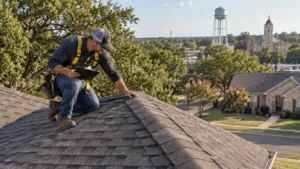
If you own a home in Luling, your roof deals with a lot more than occasional rain. Texas heat, strong sunshine, thunderstorms, wind, hail, falling branches, and sudden weather changes can all take a toll over time. That makes one question especially important: how often should you have your roof inspected? For most homeowners, once a year is a sensible starting point, but that schedule should change after severe weather, when a roof gets older, or whenever signs of damage appear.
A roof can look perfectly normal from the driveway while small problems are developing around flashing, vents, shingles, fasteners, or drainage areas. Those problems are usually easier to address when they’re found early.
That is why roof inspections should be viewed as routine home maintenance rather than something you schedule only after water starts dripping from the ceiling.
How Often Should You Have Your Roof Inspected?
So, how often should you have your roof inspected under normal conditions?
For most homes in Luling, having the roof inspected approximately once per year is a practical baseline. You should also consider an additional inspection after a major hailstorm, severe thunderstorm, high-wind event, falling tree limb, or any other incident that could have damaged the roof.
Some roofs need closer attention.
An older asphalt shingle roof, for example, may benefit from inspections more frequently than a relatively new roof that has experienced mild weather. Likewise, a roof surrounded by large trees may require additional checks because branches, leaves, and debris can create problems that have little to do with the roof’s age.
Here is a simple schedule to follow:
| Roof Situation | Suggested Inspection Frequency |
|---|---|
| Newer roof in good condition | About once per year |
| Roof 10–15+ years old | Once or twice per year |
| After a major hailstorm | Promptly after the storm |
| After severe wind | Inspect if damage is possible |
| After falling branches or debris | As soon as possible |
| Before buying a home | Before completing the purchase |
| Before selling a home | Before listing or negotiating |
| Active leak or ceiling stain | Immediately |
These intervals are guidelines rather than rigid rules. Roof material, condition, installation quality, surrounding trees, previous repairs, and storm exposure all matter.
Why Annual Roof Inspections Make Sense in Luling
Luling homeowners have an important reason to stay proactive: roofs in Central Texas can experience several different forms of weather stress during the same year.
Summer heat is one concern.
Roof surfaces can become extremely hot under direct Texas sunshine. Repeated heating and cooling can contribute to wear on roofing materials, sealants, flashing, and other components.
Then storms arrive.
Wind can loosen shingles. Hail can damage their protective surfaces. Heavy rain can expose weak points around vents, flashing, valleys, and roof penetrations.
None of that automatically means your roof is failing.
But it does mean waiting several years between inspections can give small problems plenty of time to become larger ones.
If you’re wondering how often should you have your roof inspected specifically because you live in Luling, an annual inspection gives you a useful opportunity to identify gradual deterioration while also establishing a record of the roof’s general condition.
Think of it as a regular health check for one of the most expensive parts of your home.
Should You Inspect Your Roof After Every Major Storm?
Not necessarily every rainstorm.
A normal shower generally isn’t a reason to call for a professional roof inspection. A severe weather event is different.
Consider checking your roof after:
- Large or damaging hail
- Strong wind or severe thunderstorms
- Falling tree limbs
- Wind-driven rain
- Tornado warnings or nearby severe weather
- Debris striking the roof
- Any storm followed by signs of moisture inside your home
Start from the ground.
Walk around your property after conditions are safe and look for obvious changes. You may notice shingles on the lawn, branches resting on the roof, bent gutters, damaged fascia, displaced metal panels, or debris near downspouts.
Then look inside.
Check ceilings around exterior walls, bathrooms, chimneys, skylights, vents, and upstairs rooms. If your attic is safely accessible, look for moisture stains, damp insulation, or water entering around roof penetrations.
Don’t assume everything is fine just because you can’t see missing shingles.
Some storm-related damage is subtle.
What to Check From the Ground After a Storm
You don’t need to climb onto the roof to perform a useful first inspection.
In fact, staying on the ground is usually the safer choice.
Look for:
- Missing or lifted shingles
- Shingle fragments in the yard
- Dented or displaced gutters
- Loose flashing
- Damaged ridge caps
- Fallen tree branches
- Roof sections that suddenly look uneven
- Excessive roofing granules near downspouts
- Metal panels that appear loose or displaced
- Debris collected in valleys
Binoculars can help you get a closer look without climbing a ladder.
If something doesn’t look right, schedule a professional inspection rather than trying to walk across a wet, steep, damaged, or unfamiliar roof yourself.
Does Roof Age Affect How Often It Should Be Inspected?
Absolutely.
When deciding how often should you have your roof inspected, roof age should be one of the first factors you consider.
A relatively new roof and a 20-year-old roof shouldn’t necessarily follow the same maintenance schedule.
As asphalt shingles age, they may lose granules, become brittle, curl, crack, or loosen around fasteners. Sealants can deteriorate. Flashing may separate. Pipe boots can crack. Previous repair areas can begin showing wear.
Older roofs also have less margin for additional storm damage.
Here’s a practical way to think about age:
Roofs Under Five Years Old
An annual inspection is usually reasonable unless significant weather occurs.
Even a new roof isn’t immune to hail, wind, falling branches, or installation issues.
Roofs Between Five and Ten Years Old
Continue with annual inspections.
Pay increasing attention to flashing, sealants, gutters, roof penetrations, and any previous repairs.
Roofs Between 10 and 15 Years Old
Annual inspections become more important.
Depending on material, condition, and storm exposure, you may want an additional inspection after major weather events.
Roofs 15 to 20+ Years Old
Consider closer monitoring.
That doesn’t mean a roof automatically needs replacement once it reaches a certain birthday. Some roofs age better than others.
Condition matters more than the calendar alone.
How Roof Material Changes Your Inspection Schedule
Different roofing systems wear differently, so inspection frequency isn’t completely one-size-fits-all.
Asphalt Shingle Roofs
Asphalt shingles are common and relatively straightforward to inspect.
Watch for:
- Missing shingles
- Curling edges
- Cracks
- Granule loss
- Exposed fasteners
- Damaged ridge shingles
- Problems around flashing and vents
Annual inspections are a sensible routine, with additional checks following severe wind or hail.
Metal Roofs
Metal roofs are known for durability, but durable does not mean maintenance-free.
Inspections may reveal:
- Loose fasteners
- Problems along seams
- Damaged flashing
- Corrosion
- Dents
- Sealant deterioration
- Movement around roof penetrations
A metal roof should still receive regular attention, particularly following significant storms.
Tile and Other Roofing Materials
Tile roofs can experience broken, cracked, or displaced pieces.
The visible tile is only part of the system, too. Underlayment, flashing, drainage components, and roof penetrations still need to remain in good condition.
This is another reason how often should you have your roof inspected can’t be answered solely by roof age.
Material matters.
Signs You Should Schedule a Roof Inspection Right Away
Your annual inspection schedule should go out the window when warning signs appear.
Don’t wait six months because your next routine inspection isn’t due yet.
Schedule an inspection when you notice:
- Brown or yellow ceiling stains
- Active dripping during rain
- Damp attic insulation
- Musty odors in attic spaces
- Missing shingles
- Curling or lifted shingles
- Large amounts of granules in gutters
- Sagging areas of the roof
- Damaged or displaced flashing
- Water marks around skylights or vents
- Daylight visible through roof decking
- Debris impact after a storm
Water stains deserve particular attention.
The place where water appears inside isn’t always directly beneath the point where it entered the roof. Water can travel along rafters, decking, pipes, or other building components before becoming visible.
That’s why finding the source can require a more detailed inspection.
What Happens During a Professional Roof Inspection?
A proper roof inspection involves more than looking for missing shingles.
A roofing professional will generally evaluate several parts of the roof system.
Exterior Roofing Materials
The condition of shingles, metal panels, tiles, ridge caps, valleys, and other visible materials should be assessed.
The goal is to identify missing, damaged, loose, or deteriorated components.
Flashing and Penetrations
Many leaks develop around transitions.
Areas around chimneys, skylights, plumbing vents, exhaust vents, walls, valleys, and roof edges deserve careful attention.
Flashing helps direct water away from these vulnerable points.
Gutters and Drainage
Your roof needs somewhere to send rainwater.
Clogged gutters, poor drainage, damaged downspouts, or debris-filled valleys can keep moisture where it doesn’t belong.
Inspectors may also look for unusual amounts of shingle granules accumulating in gutters.
Roof Structure
Visible sagging, uneven sections, or signs of movement may deserve further investigation.
Structural concerns shouldn’t be ignored.
Attic and Interior
When accessible and appropriate, an interior inspection can reveal information the exterior cannot.
Water stains, damp decking, damaged insulation, poor ventilation, and signs of ongoing moisture intrusion can all help explain what’s happening above.
Can You Inspect Your Roof Yourself?
Partly.
Homeowners can perform valuable visual checks without stepping onto the roof.
I recommend getting familiar with what your roof normally looks like. Take a few photos from the ground when the roof is in good condition. After a storm, compare them with what you see.
That makes unusual changes easier to spot.
You can also:
- Check ceilings for stains
- Inspect the attic after heavy rain
- Look at gutters from a safe position
- Watch for roofing debris in the yard
- Look for missing shingles from the ground
- Check areas around the home for fallen branches
What you shouldn’t do is put yourself at unnecessary risk.
Roof surfaces can be much steeper and more slippery than they appear from below. Storm damage can also make roofing materials unstable.
Professional inspections provide a closer evaluation without requiring you to take that risk.
Why Small Roof Problems Are Easier to Deal With Early
A small roof problem doesn’t always stay small.
Consider flashing.
A slight separation around a vent may initially allow only a small amount of moisture through. Over time, repeated exposure can affect surrounding decking, insulation, drywall, or interior finishes.
Or take a missing shingle.
One missing piece isn’t necessarily a catastrophe. But the material beneath it now has less protection from sun, wind, and rain.
Routine inspections create opportunities to catch these problems earlier.
That’s one of the strongest answers to how often should you have your roof inspected: frequently enough to find minor issues before they become obvious from inside your house.
Once you can see water dripping from the ceiling, the roof has probably been allowing water into the building system for at least some period of time.
Earlier detection is better.
When Is the Best Time of Year for a Roof Inspection in Luling?
If you’re scheduling a routine inspection rather than responding to damage, spring or fall can both work well.
Spring Roof Inspections
A spring inspection can help identify problems before intense summer heat and thunderstorms become more frequent.
It can also reveal damage that developed during previous months.
Fall Roof Inspections
Fall is another practical option.
Your roof has just endured months of strong sun, heat, wind, and summer storms. Inspecting it before cooler months provides a chance to identify wear that accumulated during the year.
There is one important exception.
If severe weather damages your roof in June, don’t wait until October because fall is your preferred inspection season.
Storm damage operates on its own schedule.
Should You Have Your Roof Inspected Before Buying a Home?
Yes, it’s worth considering.
A home’s roof can represent a significant future expense, so buyers should understand its condition before completing a purchase.
A roof-focused evaluation may provide useful information about:
- Approximate roof age
- Visible deterioration
- Previous repairs
- Damaged roofing materials
- Flashing condition
- Ventilation concerns
- Potential leaks
- Expected near-term maintenance
A general home inspection can reveal many roofing issues, but a dedicated roof evaluation may provide additional detail when the roof is older or there are signs of previous problems.
That information can help you budget realistically.
Should You Inspect Your Roof Before Selling Your Home?
This can be useful as well.
Finding a roof issue before listing your property gives you time to understand it without the pressure of a buyer’s deadline.
You can evaluate repair options, gather documentation, and avoid being surprised during negotiations.
It may also make answering buyer questions easier.
No roof is perfect, particularly an older one. The goal isn’t to present an aging roof as new.
The goal is to know what you’re working with.
How Much Does Roof Maintenance Depend on Inspection Frequency?
Inspection and maintenance work together.
An inspection identifies issues. Maintenance addresses appropriate ones before they progress.
Common maintenance items may include:
- Replacing damaged shingles
- Addressing loose flashing
- Removing accumulated debris
- Clearing drainage paths
- Repairing damaged sealants
- Correcting minor gutter problems
- Checking pipe boots and vents
Regular inspections don’t guarantee that your roof will never leak.
Weather can still cause sudden damage.
But knowing how often should you have your roof inspected and sticking to a reasonable schedule gives you a better opportunity to find developing problems instead of discovering them during a heavy rainstorm.
A Practical Roof Inspection Routine for Luling Homeowners
You don’t need an elaborate maintenance calendar.
Keep it simple.
Every Few Months
Walk around your home and visually check the roof.
Look for obvious changes, damaged gutters, fallen branches, and missing materials. Check interior ceilings for discoloration.
Once a Year
Arrange a more thorough roof inspection.
This is especially useful for areas that aren’t easy to evaluate from the ground.
After Severe Weather
Check your property after conditions become safe.
If you experienced hail, high winds, falling debris, or other potentially damaging weather, consider arranging another inspection.
As the Roof Ages
Increase your attention.
An older roof may deserve inspection twice a year or after weather events that would be less concerning for a newer roofing system.
Keep records, too.
Save inspection reports, repair invoices, photographs, installation paperwork, and warranty information. These records help you track recurring problems and understand how your roof has changed over time.
How Often Should You Have Your Roof Inspected? The Final Answer
For most Luling homeowners asking how often should you have your roof inspected, the simplest answer is about once per year, plus after significant storms or whenever you notice warning signs.
That’s a starting point.
A newer roof in excellent condition may only need its normal annual inspection unless severe weather occurs. An aging roof that’s already showing wear may deserve attention more frequently.
The key factors are:
- Roof age
- Roofing material
- Previous damage
- Severe weather exposure
- Nearby trees
- Repair history
- Current roof condition
Don’t base your schedule purely on whether the roof is leaking.
Leaks are late-stage clues.
Regular inspections give you a chance to see what is happening while your roof is still doing its job.
Frequently Asked Questions
How often should you have your roof inspected in Texas?
For most Texas homeowners, an annual roof inspection is a useful baseline. Additional inspections may be appropriate after hail, high winds, falling debris, or other severe weather.
Do I need a roof inspection after hail?
If your property experienced significant hail, having the roof checked can be worthwhile even when obvious damage isn’t visible from the ground. Hail impacts can affect shingles, vents, flashing, gutters, and other roof components.
How often should an older roof be inspected?
Older roofs may benefit from inspections once or twice per year depending on their material, condition, previous repairs, and storm exposure.
Can a roof look fine but still have damage?
Yes. Some problems develop around flashing, seals, roof penetrations, fasteners, or beneath roofing materials where they’re difficult to see from the ground.
Should I inspect my roof after high winds?
It’s wise to perform at least a visual ground-level check after unusually strong wind. Look for missing shingles, loose materials, damaged gutters, fallen branches, or changes in the roof’s appearance.
What is the best month for a roof inspection?
There isn’t one perfect month. Spring and fall are both convenient times for routine inspections, but suspected storm damage should be evaluated when it occurs rather than waiting for a specific season.
How long does a roof inspection take?
The time varies depending on roof size, pitch, material, complexity, accessibility, and condition. A simple residential roof may take less time than a large roof with multiple slopes, valleys, additions, skylights, or other features.
Can I inspect my own roof?
You can perform basic checks from the ground and inside your home. For a closer evaluation, hiring someone trained to inspect roofing systems avoids the risks associated with climbing onto the roof yourself.
What problems are commonly found during roof inspections?
Inspections may reveal missing or damaged shingles, deteriorated flashing, cracked pipe boots, drainage problems, loose components, aging sealants, storm damage, and signs of moisture intrusion.
Should a new roof still be inspected every year?
Yes. A newer roof can still experience storm damage, debris impacts, drainage issues, or installation-related problems. Annual inspections help establish its condition and catch unexpected issues early.
Conclusion
Ultimately, how often should you have your roof inspected depends on the roof sitting above your particular home. Annual inspections provide a solid baseline, but weather, age, materials, and visible warning signs should always influence the schedule.
Your roof doesn’t need constant attention.
It does need consistent attention.
A few minutes of observation throughout the year, combined with periodic professional inspections, can give you a clearer understanding of its condition and help you make better maintenance decisions before small roofing concerns turn into disruptive repairs.